
On a slushy highway it often takes just a few miles: the backup camera shows only a milky picture, the parking sensors beep for no reason, and a message pops up saying a sensor is blocked. The culprit is usually a film of road salt, grime and water.
Modern cars have more and more of these: parking sensors in the bumpers, cameras on the tailgate, mirrors and behind the windshield, and radar sensors behind the grille or badge. To keep driver assistance systems working, and to see and be seen, a quick, regular check is worth it in winter.
Where are the sensors on your car?
It varies from model to model. Typical locations are:
- Parking sensors: round dots in the front and rear bumpers
- Backup camera: usually above the license plate or in the tailgate handle
- Front camera: behind the windshield near the rearview mirror
- Radar sensor: behind the grille, the brand badge or in the lower bumper
- Side cameras: under the side mirrors
It's worth checking your owner's manual: it shows exactly where the sensors are and what the manufacturer recommends for cleaning.

How to clean sensors and cameras gently
1. Soak first, don't scrape
There's often fine grit on the sensors. Wiping them dry can scratch the surface. Rinse the areas with water first, or lay a wet microfiber cloth on them for a moment to loosen the dirt.
2. Wipe gently
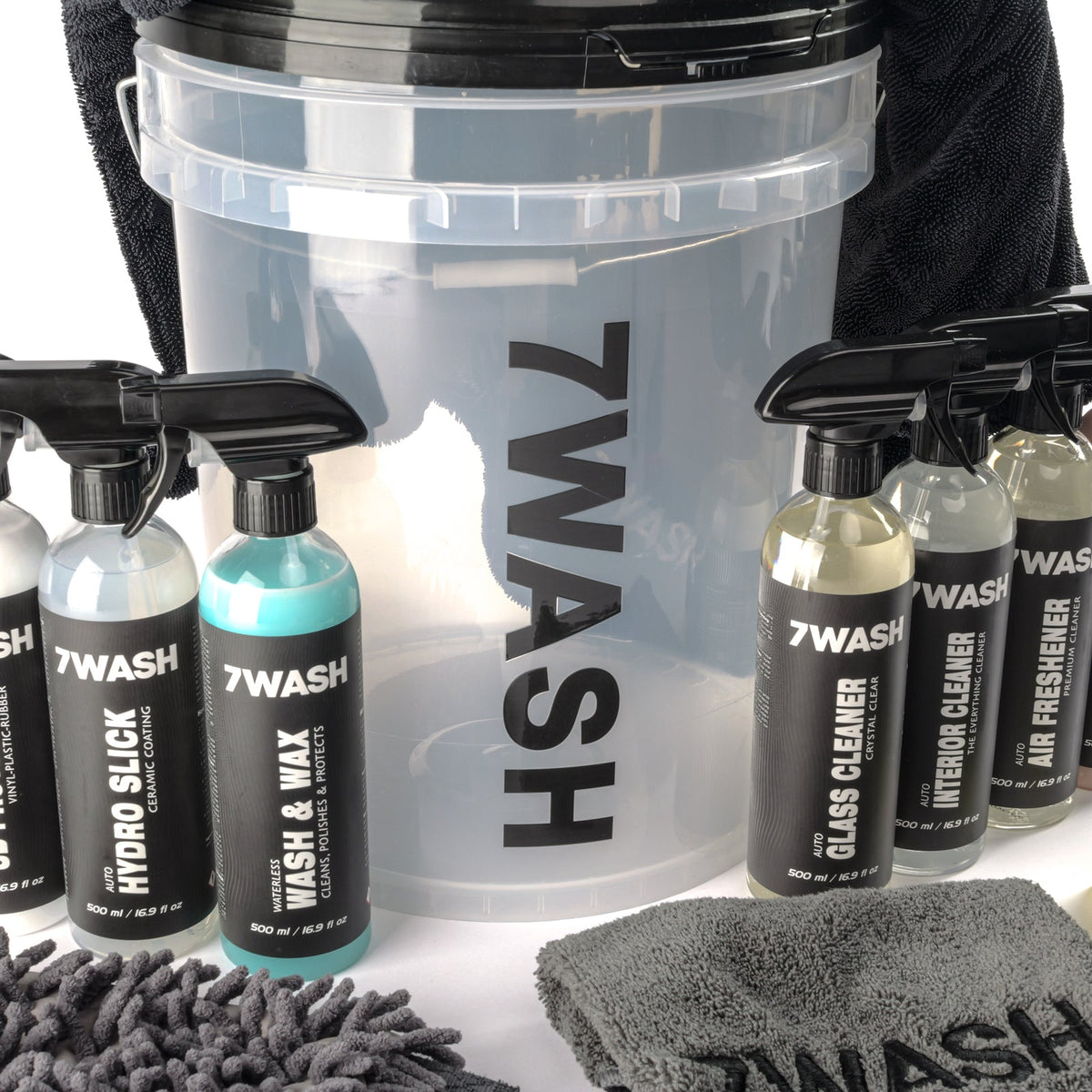
Wipe parking sensors, camera lenses and the radar cover with a soft, clean microfiber cloth, without pressure. During a hand wash, these spots simply become part of the routine: a solution of 7WASH Wash Shampoo and a soft mitt reliably loosens salt and grease.
3. Dry afterwards
Water droplets on a camera lens distort the image just as much as dirt. Wipe with a second, dry cloth.
4. Front camera: windshield inside and out
The front camera looks through the windshield. A smeary film outside or haze inside can affect its view. 7WASH Glass Cleaner is made for windshields, mirrors and displays and evaporates quickly. Spray it on, clean with a microfiber cloth, and buff streak-free with a second cloth.
What not to do
- No ice scraper on sensors or cameras. Let the ice thaw or loosen it with lukewarm water.
- No hot water on cold cameras or glass.
- Don't aim a pressure washer directly and up close at sensors, cameras and edges. Keep your distance and follow the manufacturer's instructions.
- No plastic dressings or wax on sensors and camera lenses unless the manufacturer specifically recommends it.
- No paper towels: they can leave lint and cause fine scratches.
Headlights and taillights
In winter you often drive in the dark, and dirty headlights light the road less well. At the same time, other drivers see you less clearly. After driving on wet, salted roads, a gray film builds up quickly.
Clean headlights and taillights at every wash with shampoo solution and a soft mitt, rinse thoroughly and dry them. On the road, for example at a gas station, a damp microfiber cloth is often enough. The same rule applies: dampen first, then wipe; never rub dry over salt crust.

The 2-minute light check
When it's dark and snowy, a quick light check once a week is worth it. The easiest way is in front of a garage door or a shop window where you can see the reflection:
- Switch on low beams and parking lights and walk around the car.
- Check the turn signals on both sides and the hazard lights.
- Brake lights: Ask someone to help, or look at the reflection in a window behind you.
- Briefly test the rear fog light and reverse lights.
- Don't forget the license plate light.
If one light looks noticeably dimmer than the other, dirt is often the simple cause. Clean first, then judge.
Tips for the road
- Keep a microfiber cloth in the car: A clean 7WASH Microfiber Cloth in the glove box is worth its weight in gold in winter.
- Winter washer fluid: Use freeze-resistant washer fluid and keep the reservoir full, especially if your car has headlight washers.
- Check before you drive: A quick walk around the car before you set off reveals snow-covered sensors and lights.
- Take warnings seriously: If the car reports a blocked sensor, stop somewhere safe and clean it. If the message stays, check the owner's manual.
More tips for the cold season are in our winter car care checklist and our article on washing in cold weather.
In between: light dust on the paint
For light dust on painted surfaces between washes, 7WASH Wash & Wax works well: spray on, wipe with a microfiber cloth, done. It's only meant for light dirt, though; always loosen salt crust with water first.
The right 7WASH products
- 7WASH Glass Cleaner – $8.90
- 7WASH Microfiber Cloth – $8.90
- 7WASH Wash Shampoo – $9.90
- 7WASH Wash & Wax – $11.90
- 7WASH Exterior Finish Kit – $55.00
Frequently asked questions
Can I spray glass cleaner on the backup camera?
Check your owner's manual. Many manufacturers recommend only water or a mild shampoo solution and a soft cloth for camera lenses. Use Glass Cleaner on the windshield in front of the front camera, on mirrors and on displays.
Why do my parking sensors beep when nothing is there?
Snow, ice or a layer of dirt on the sensors is often the reason. Clean them carefully. If the beeping continues, have the system checked.
How often should I clean sensors in winter?
In slush and salt, give them a quick check at every fuel stop and clean them thoroughly at every wash.
Can I clean sensors with a pressure wand at a wash bay?
With enough distance and without aiming directly at the edges, this is usually fine. You'll find the exact recommendations in your owner's manual.